Independent Eddy Current tube testing for centrifugal, absorption, and screw chillers.
Services
.png/:/cr=t:8.05%25,l:0%25,w:100%25,h:83.89%25/rs=w:365,h:365,cg:true)
Eddy Current Testing
Commercial HVAC Service
Eddy Current Testing
We test the tubes inside your chiller without cutting anything open. A probe travels the full length of every tube and reports wall loss, pitting, cracking, and support wear. You will receive a written report showing exactly which tubes are failing and/or deteriorating.
Our Story
Commercial HVAC Service
Eddy Current Testing
We are a small, woman-owned business, TERO certified, with over 30 years inside the working parts of
absorption, screw, and centrifugal chillers. We are independent. We do not sell tubes, so we have no
reason to find more problems than you have.
Commercial HVAC Service
Commercial HVAC Service
Commercial HVAC Service
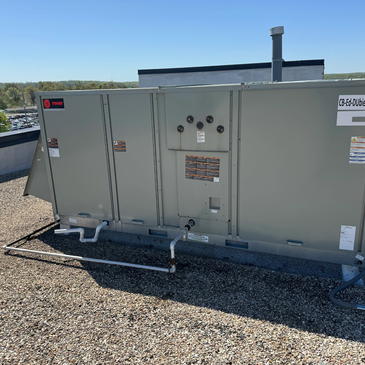
Installation, maintenance, and repair on commercial rooftop and packaged units from 1 to 40 tons.
Straightforward pricing and technicians who turn up when they said they would.
Spot Cooler Rentals
Commercial HVAC Service
Commercial HVAC Service
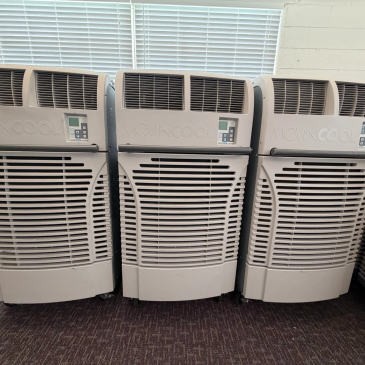
Portable cooling for power outages, equipment failures, and temperature-sensitive rooms. Short-term or long-term. We come out, work out what capacity and power you need, and deliver. 1, 3, and 5 ton units available.
What is Eddy Current Testing?
Eddy current testing is a method for inspecting the interior of metal tubing without taking anything apart or damaging the tube. A small probe carrying an alternating electrical current is pushed down the length of each tube. That current creates a magnetic field, which in turn generates a second, smaller electrical current within the tube wall itself. Anything wrong with the tube wall — a pit, a crack, a thin spot, a groove worn by a support plate — disturbs that second current in a way our instrument can measure.

Eddy Current Testing

A short history
The underlying science was described in 1879. The first commercial tube testing instrument arrived in 1930, called the Model E Probolog. Modern equipment uses a frequency generator, an impedance bridge, and a probe housing one or more coils — the same principles, far better resolution.
It is a comparison test
Eddy current testing is one form of non-destructive testing, and it works by comparison. We use a reference tube made of the same material and dimensions as the tubes in your machine, with defects machined into it at known depths. Your tubes are measured against that standard. Without a matched reference tube the numbers in a report mean very little, which is one reason it matters who does the testing.
What we look for:
- Wall loss from general corrosion
- Pitting, including pits that have not yet gone through
- Erosion at the inlet ends, where damage usually starts
- Wear where tubes pass through support plates
- Cracking and splitting
- Damage from cleaning brushes and past repairs
- Tubes that are already plugged, and whether they were plugged correctly
Eddy Current Testing
What you get
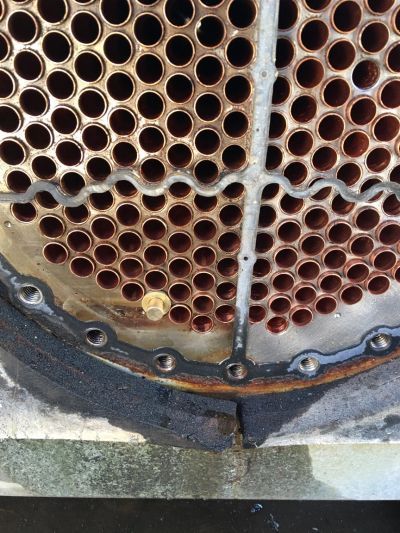
A written report listing every tube by row and column position, with the percentage of wall loss for
each. Tubes are grouped so you can see at a glance which need plugging now, which need watching, and which are sound. If you have had the machine tested before, we compare against that earlier test so you can see the rate of deterioration and estimate remaining life.
How long it takes
Most machines are tested in a day. Larger bundles and machines with heavy fouling take longer. The
bigger variable is preparation — the heads have to be off, and the tubes have to be brushed clean before we can test. See our page on how to prepare your chiller.
When to do it
As a general rule, every three to five years alongside scheduled chiller maintenance. Annually if you are on well water, if you have no water treatment programme, or if you have already had a tube failure. Always before you buy a used machine, and always after a leak.

Contact Form Introduction
Tell us about the machine, and we will send you a price, usually within one business day. The make, model, and serial number let us work out the tube count, tube size, and material, which is
most of what determines the cost. If you do not have them to hand, take a photo of the nameplate and attach it below.
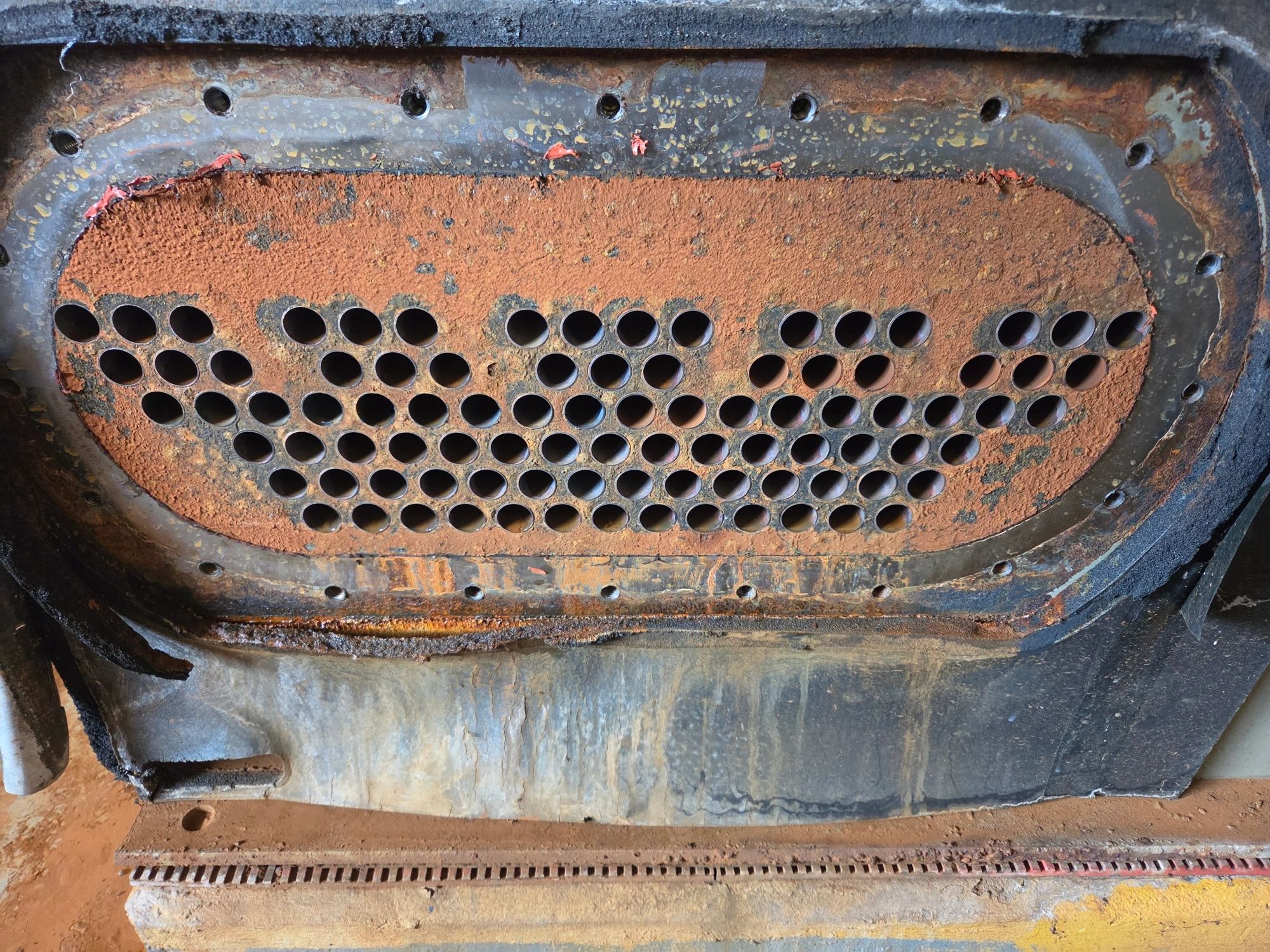
How to prepare your chiller
Preparation is what determines whether the test takes one day or three, and whether the report is worth reading. Here is exactly what needs to happen before we arrive. Print this and hand it to whoever is doing the work.
Before the day
Schedule the machine down. It cannot be tested running.
• Have the make, model, and serial number ready, plus any previous test reports.
• Confirm who is pulling the heads and who is brushing — usually your service contractor.
• Check what site access, safety orientation, or badging we will need, and tell us in advance.
Pulling the heads
Remove the head from the end without the piping attached.
• Set that head aside, normally along the side of the machine, well clear of the test end.
• Leave the piped end alone unless we have told you otherwise.
• Have new head gaskets on hand for reassembly.
Cleaning the tubes
Brush every tube mechanically with a proper tube-brushing machine. A Goodway RAM-4 or RAM-6
or equivalent is the usual choice.
• Use the correct brush size and type for your tube material. The wrong brush damages tubes, and
we will see that damage in the results.
• Brush the full length, not just the ends.
• Flush afterwards so loose debris is not left sitting in the tubes.
Tubes must be clean and dry enough for a probe to pass freely. Scale, sludge, and biological growth
interfere with the readings and can mask the very defects you are paying us to find.
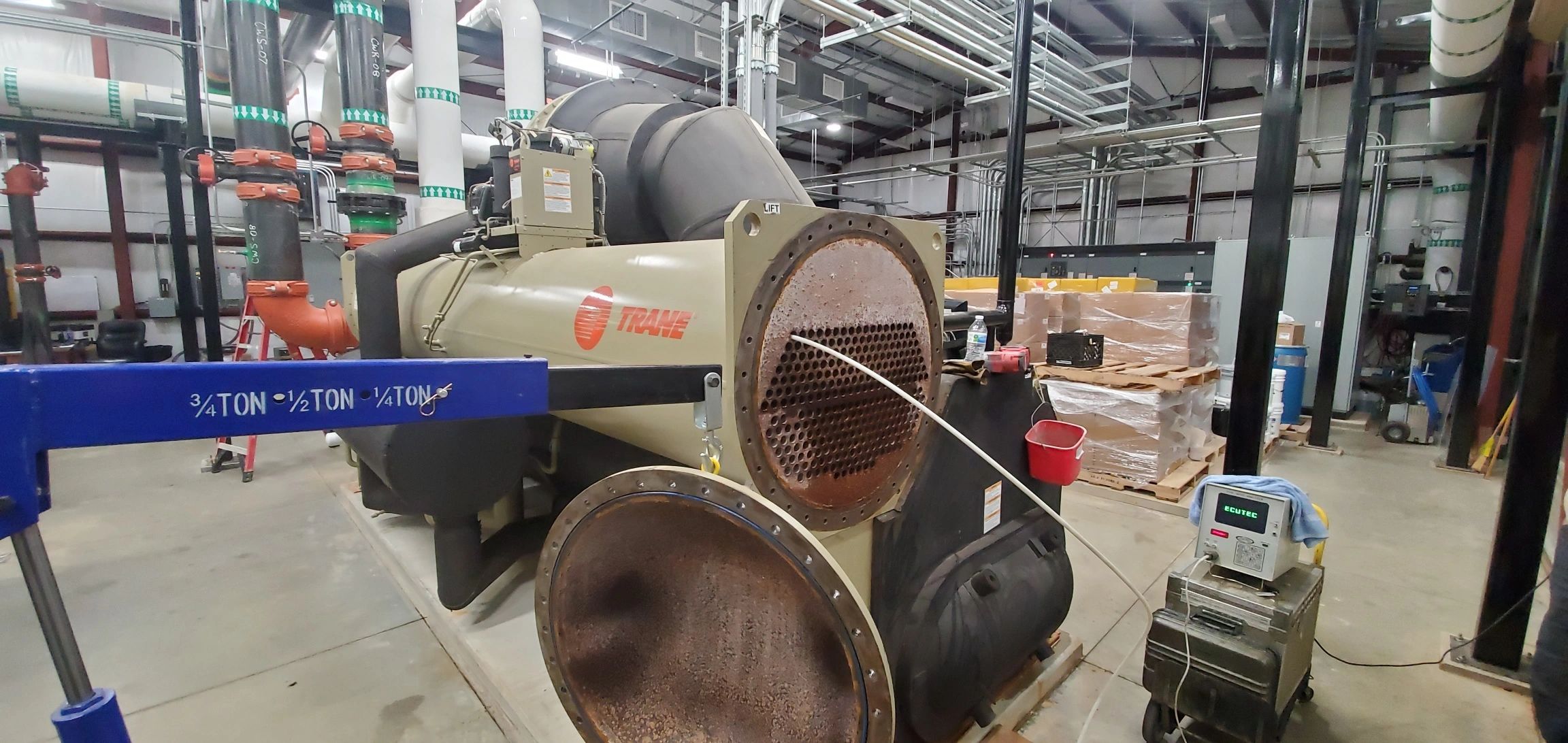
How to prepare your chiller continued
Onsite
- Clear working space at the test end — we need room to feed a probe the full length of a tube.
- A standard 110-volt outlet within reach.
- Adequate lighting.
- Somebody available who knows the machines history.
What can cause delays
- Tubes not brushed or brushed only at the ends.
- The wrong head was removed.
- Water left standing in the bundle.
- No clear space at the test end.
- Nobody on site with authority to make decisions if we find something serious.
Questions
Call us before the shutdown rather than during it. We would much rather spend ten minutes on the phone in advance than have you lose a day.
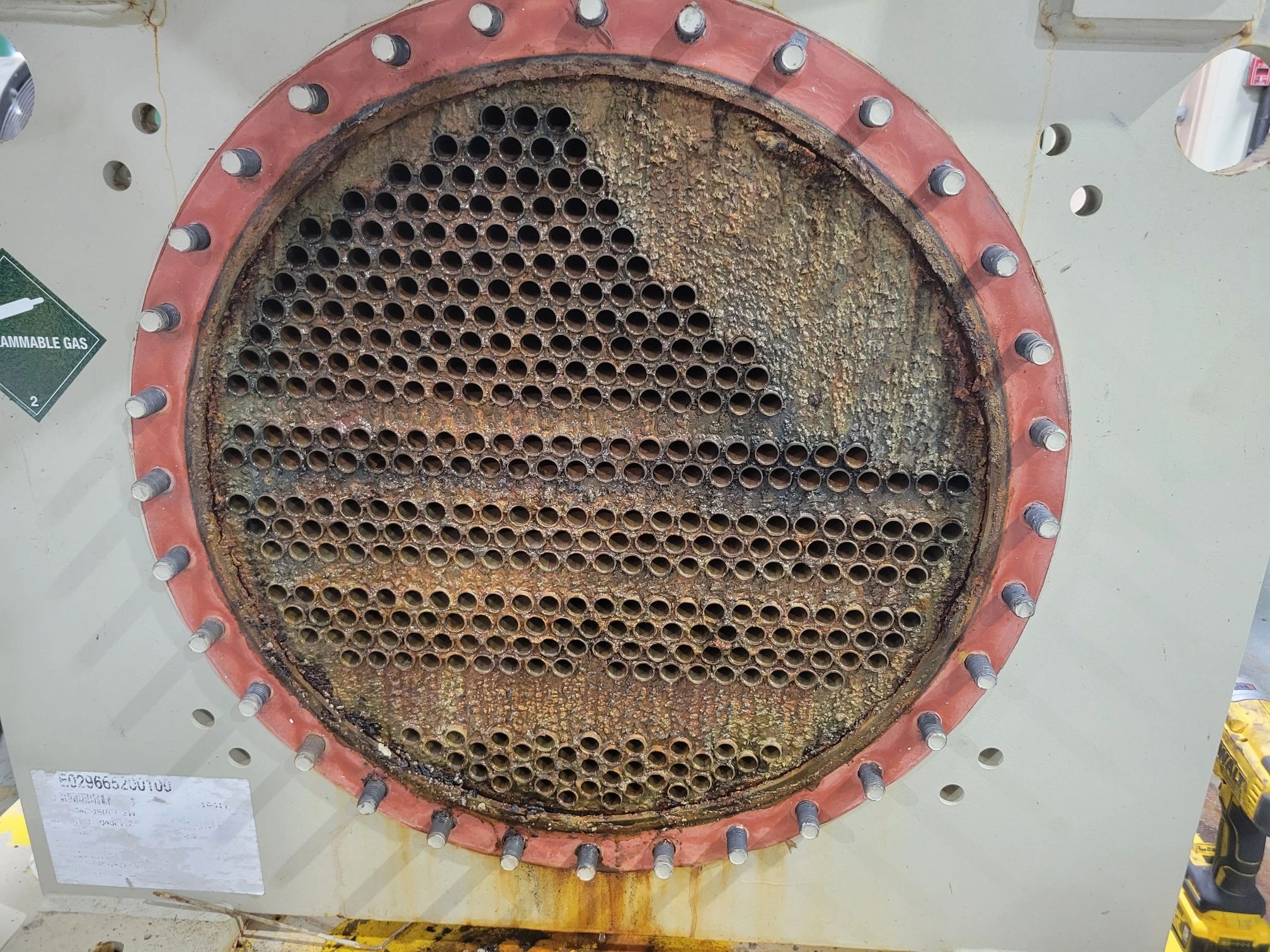
Eddy Current Tested Chillers


Service Area
We are based in Owasso, Oklahoma, just north of Tulsa.
Regular Service areas:
Oklahoma — Tulsa, Oklahoma City, Owasso, Broken Arrow, Norman, Lawton, Enid, Muskogee, Stillwater, Bartlesville
• Texas — Dallas, Fort Worth, Houston, Austin, San Antonio, Odessa
• Arkansas — Fort Smith, Little Rock, Fayetteville, Springdale
• Kansas — Wichita, Kansas City, Topeka
• Missouri — Joplin, Springfield, Kansas City
• Iowa — Des Moines
Further afield
We travel outside this area regularly for multi-machine jobs, campus and plant-wide testing programmes, and customers with sites in several states. If you have more than one machine, distance matters much less than you would expect. Ask.
Multi-site customers
If you manage chillers across several buildings or several states, we can put together a rolling testing schedule so every machine is on a three- to five-year cycle without you having to track it. One point of contact, one report format, one price structure.
Travel and pricing
Travel is built into the bid, so the number we quote is the number you pay. Grouping machines in the same region into one trip reduces the cost for everybody.
Certifications